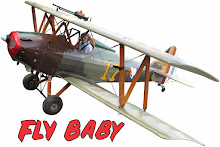
Monday, January 12, 2015
Registration Number Changed To NC1184
When the plane was first registered it was given Temporary Registration Number 1184. In November 1927 it was given License Number NC3391. That number is currently on a Pitts Special. I was able to get NC3397 which was at least close. The once temporary 1184 was on a Twin Beech when I started this project. That number has expired long enough that for $10 I was able to get it. As of today the number has been changed on the plane back to NC1184. OK enough paperwork, back to working on the plane.

Friday, January 9, 2015
Updates to History Post about Lloyd Yost and Fred Nelson
I've made big changes to the recent posting . Lots more pictures and stories. It is incredible the amount of information you can find on the web. Please go check it out.
Thanks,
Dennis
Thanks,
Dennis
Thursday, January 1, 2015
Some Early History of WACO NC3391 - Lloyd O. Yost and Fred C. Nelson
During a Christmas visit to my son and his family we were discussing his progress on genealogy work for his wife's family tree. Some of her recent relatives were from Harrisburg, Pa. As a result he had paid for a service which allows him to search more old newspapers than are freely available on line. My interest was raised because the Harrisburg area is where my WACO spent it's first 10 years. My question was could he find any information on it or the people involved with it. The answer was information overload. It turns out not only was aviation a hot subject back then, some of the people involved with this plane were well known locally.
Before we go there here is a brief time line of the life of this plane
June 20, 1926 Purchased from local dealer Lloyd O. Yost (list price $2250)
June 30, 1926 Delivered to First owners Fred Nelson and Ernie L. Wilhelm of Middletown, Pa
Feb. 10, 1927 With 200 hours flight time and a fresh engine overhaul they applied for for an Airplane License
April, 1927 Temporary License Number 1184 Assigned pending inspection of the plane
May 17, 1927 Passed government inspection with a note that the plane was very well cared for
Nov, 7, 1927 Commercial Aircraft License No. C3391 issued (Expires 1 Nov. 1928)
May 27, 1928 Fred Nelson buys out Ernie Wilhelm's half interest
Mar. 27, 1929 Sold to Benson R. Spangler and William H. Fink of Mechanicburg, Pa
Airplane time 365 hrs. 25 min. Engine time since overhaul 129 hrs. 20 min.
Mar. 27, 1930 Benson Spangler sells half interest to John A. Betz ($750)
Airplane time 493 hrs. 10 min. Engine time since overhaul 280 hrs. 55 min.
Apr. 15, 1930 Reported Engine Top Overhaul
Apr. 10, 1931 Approved Reinforcements installed on front and rear upper spars
Jun. 10, 1932 Log time 844 hrs. 20 min. Complete recover & overhaul. Gross weight 2100 lb, baggage 20 lb
Dec. 1, 1932 Total Flight time 822 hrs. 40 min., 49 hrs. 30 min since overhaul
Jun. 2, 1933 Total Flight time 928 hrs. 15 min., 80 hrs. since overhaul
Jun. 6, 1933 John Betz received a violation for "performing acrobatics below 1500 feet"
and for "performing acrobatics without a parachute"
May 19, 1935 John Betz sells his half interest to William Fink
Jun. 12, 1935 Total Flight time 1004 hrs., 27 hrs. since overhaul
Jun. 12, 1936 Plane sold to Carl Bradshaw of Pinehurst, North Carolina
July 1, 1936 Engine overhauled by Harold Bachman, Southern Pines, NC
July 13, 1936 Total Flight time 1024 hrs. 25 min., 180 hrs. 5 min since overhaul
May 29, 1937 Plane sold to J N (Joseph Nathaniel) Brown of Salisbury, NC
Plane Identified but not Licensed for Commercial use (remove the "C" or "NC")
Jun 19, 1937 Identification Mark 3391 issued
July 15, 1939 Registration Certificate Expired
1939 The fuselage and tail were traded to Willard Moore of Jamestown, NC as part of a trade
of his J3 Cub for Josephs J2 Cub. He and his brother planned to make the fuselage into an
airboat and cut of the front of the fuselage at the middle of the front cockpit.
WWII came and they never finished the airboat.
The fuselage was eventually sold to Morton Lester of Martinsville, Virginia
Sep. 19, 1961 Joseph Nathaniel Brown Died Leaving his estate to his wife Fern C. Brown
Their only son was Joseph Irwin Brown.
Fern eventually remarried and her husband died before her leaving Joseph Irwin Brown
The "Heir At Law" for the WACO
May 18, 1996 I acquired the Fuselage from Morton Lester
Mar. 2, 2001 After locating Joseph Irwin Brown in Kernersville, NC I acquired Title to the plane.
Back to our searches in the news paper. We started with Lloyd O. Yost the WACO Dealer and
Fred Nelson the first owner. They both made the newspapers on a regular basis and were probably friends.
They lived, worked and flew within a few miles of each other at a time when aviation was just taking off. They were also both in the Air Corps and learned to fly during WWI. Fred was stationed at the Middletown Air Intermediate Depot (now Harrisburg International) and Lloyd had involvements there.
This map covers the area where NC3391 spent it's first 10 years.

I had learned a little about Lloyd previously. He was born Jan. 2, 1897 in Myerstown, Pa. (upper right on map). He graduated from Myerstown High School in 1912 and in 1917 from Ursinus College (N.E. of Philadelphia). When WWI started he enlisted in the Signal Corps rather than continue working in his fathers successful dairy business. He went to the Princeton School of Aeronautics and then with 19 other cadets and Col. T.C. Turner went to Barron Field (Camp Taliaferro Field #2) located in what is now suburban Fort Worth, Texas. There he became a Primary Stage flight instructor and then Formation instructor which allowed him to participate in formation demonstrations for visiting celebrities.
Barron Field was closed in April 1919 and Lloyd stayed on as Post Adjutant to close up the field until his discharge 25 Aug 1919. The June 24,1919 Lebanon Daily News reported he was returning to Texas from a furlough and his mother was travelling back with him "anticipating having her first experience in an aeroplane before returning home." The next day The Evening News (Harrisburg) reported he had just "received today from the Army and Navy Board on Aeronautic Cognizance, at Washington, ... License No. 848, permitting him to operate an airplane as a civilian."
After his discharge he purchased a used JN4C (Jenny) in Texas and headed home. On Sep. 13, 1919 the Lebannon Daily News (Lebannaon, Pa.) ran an article about some of his adventures, including the fact that he was paid $1 per minute for a cross country flight. In today's dollars that's $13.65 per minute or $819 per hour.

From there he headed home, well almost. On Sep. 20, 1919 The Daily Courier (Connellsville, Pa) reported "PLANE DEMOLISHES FENCE", "Uniontown had an airplane wreck today. A Curtis plane owned by Lloyd O. Yost, flying from Byron Field, Texas, to Myerstown, Pa, made a bad start after landing for gasoline at Hogsett's cut and crashed into a fence. Fifty feet of the fence was demolished and the plane put out of commission."
This didn't stop him. In 1920 he purchased another Jenny in Texas and flew it home successfully. According to the Pinehurst Outlook (Pinehurst, N.C.) Mar 3, 1933 his first paying passenger was in Ardmore. Ok., she "was an Indian woman, Mrs. Johnson, who paid the first ten dollars for a short trip in the air. Crowds of interested patrons milled about the field, and after two days of constant hops into the sky, Yost left for Ada, another prosperous town. ... the plane did a land office business." It's not clear if this was with his first Jenny or the second. In an interview in the 1970's he stated that the plane had cost him $2,500 and that at $10 per ride he paid for it in 3 weeks.
On May 6, 1920 the Lebanon Semi-Weekly News reported "LLOYD O. YOST ARRIVED HOME WITH AEROPLANE".

He must have felt he finally had a future in aviation because on June 5, 1920 the Evening Report (Lebanon, Pa.) reported his engagement to Miss Mildred D. Erney of Fort Washington, Pa. The local papers continued regular reports on where he had given rides or demonstrated stunts.
The Lebanon Semi-Weekly News of Aug. 2, 1920 reported:

His business prospered and "In the fall of 1921 he built a hangar at the Millard Field near Palmyra, Pa." On Aug. 19, 1922 The Lebanon Daily News Reported on his purchase of another plane, probably another Jenny which he kept at the flying field "on the Millard farm."

The Lebanon Semi-Weekly News reported on Feb. 11, 1924 "Lloyd O. Yost, the well known aviator, has purchased a three place airplane, which he proposes to use at the Millard flying field, near Annville, during next season. It is the first two-passenger airplane in this section." I wonder if he became a WACO dealer because he bought one of their pre-Model NINE airplanes.
On Labor Day, Sep. 7, 1925, Lloyd flew his plane into a mountain near Conyngham, Pa. Twos days later his father reported the wrecked plane "...was a good one, but one which was in service for some length of time. A new plane is being delivered to the local aviator by the end of the month."

That new plane was also a WACO NINE. He flew it in the first Commercial Airplane Reliability Tour, Sep. 28 - Oct. 4, 1925. This Tour was also known as the Ford Reliability Tour because of the money and Trophy Ford provided to support the tour. Lloyd was one of the 11 pilots to complete the tour (17 started) flying his WACO NINE, construction number 2 according to FAA records. All the pilots who completed the tour were declared winners and places were assigned to other pilots based on how far they made it along the tour. The winners also received a medal.
After the Tour Lloyd went to Pinehurst, North Carolina and established Knollwood Airport. Richard Tufts of Pinehurst and others wanted an airport to serve the resorts of Pinehurst and Southern Pines. This Pinehurst connection which lasted for many years is how my WACO eventually moved form the Harrisburg area to Pinehurst. The first season 1925-1926 he spent the winter in Pinehurst and returned to Millard Field for the summer around May 1st.
On Saturday, July 12, 1926 Lloyd was scheduled to give rides and perform stunts for the crowd at the Altoona Speedway. The Speedway was opened in 1923 and attracted such large crowds that after filling the stands they routinely had 30,000 - 50,000 people in the infield. They raced on the boards. This was a banked wooden track built on flat land. It's hard to imagine racing cars and motorcycles on a wooden track. There are some great pictures on Facebook. Which brings us to a picture I have of Lloyd's plane. From the small text below the cockpit opening it is clearly his plane from the 1925 Ford Tour.

But it's crashed and there is a huge crowd with military people guarding the plane. Now I know where it was taken.

Later that day they packed up the plane and took it back to Millard Field.

Eight days later he sold a WACO NINE to Fred Nelson and Ernie L. Wilhelm. It then appears he left for Troy, Ohio to pick up their plane and fly it back to Middletown. I assume he also spoke with the factory about repair parts for his plane which, according to his application to license his airplane in 1927, it was rebuilt Sep. 4, 1926.
On June 30, 1926 Lloyd delivered WACO Model NINE c/n 264 (Later NC3391) to Middletown and our story switches to Fred Nelson and some of the early flying of what is now my airplane.
First Owners Fred C. Nelson and Ernie Wilhelm
Fred Nelson was born April 14, 1894 in South Dakota to a Norwegian father and Swedish mother. Before enlisting in the army he was an automobile salesman in Portland, Oregon. On April 6, 1917 the United States declared war on Germany, 2 day later, just before his 23rd birthday, he enlisted in the Army infantry in California. "... but soon transferred to aviation and received his training at March Field, California. After becoming a licensed pilot. Nelson was ordered to France ..., but before embarking for the front at New York he was transferred to the Middletown Airport as a test pilot." He arrived December 23, 1918 and "He was one of the first aviators to make flights in this section." From an article, which appeared after his death, in the Harrisburg Telegraph, December 16, 1937 we are told "..., he was brought back to train other aviators for the fighting jobs. He said nothing but did his job. well. Many, who later saw action in France owe their lives to the thorough instruction and capable guidance of "Shorty" Nelson." We also discovered he was known as "Shorty" not Fred, although from another piece written after his death in 1937 it seems he never liked being called Shorty. I don't think he trained anyone for the War since it ended a month and a half earlier on November 11th.
He did participate in the Victory Bond effort because according to Aerial Age Weekly, July 14, 1919 He gave a ride to "Mrs. Martha H. O'Neill, 80 years old of Gettysburg, Pa. on June 27." She "experienced her first flight in an aeroplane. She had won the right to make this flight by selling the largest number of Victory Bonds in the recent campaign in her home town."
He also participated in the Great Transcontinental Air Race of 1919, officially the "Transcontinental Reliability and Endurance Test." General William "Billy" Mitchell wanted the Air Service to show what it could do. Two groups of planes flew across the country and returned between New York and San Francisco. The Race started October 8, 1919 and was won on October 18 by Lieut. Belvin Maynard, who had also recently won the New York to Toronto Race. That same day The Evening News (Harrisburg) reported "Lieutenant "Shorty" Nelson and Lieutenant Samuel Lunt are believed to have arrived in Sacramento, California." The race officially ended October 31 with 33 planes making it one-way across the country and 8 making a round trip. Along the way 7 people died in accidents.

The chart below, from The New York Times October 9, 1919, shows all the east coast starters. Fred is flying plane #6 and left New York at 12:35:04 pm and arrived at Binghamton, NY at 2:22 pm. It says he was flying a DH 4. I believe the local newspaper would have had more correct information from Fred's home base than The New York Times. I'm sure he was flying a DH 9-A. Since Samuel M. Lunt was also an Army photographer there must be some pictures of their trip out there somewhere.
The amazing planes which are entered in this race are the S.E. 5 and Spad airplanes which were single seat WWI Fighters, not planes I would pick for such a flight. They were however 2 of the top fighters of WWI.

In 1919 Fred was stationed at Middletown Aviation General Supply Depot. The Depot was located next to the Susquehanna River just south of Harrisburg, Pa. on land which was originally a "Pickle Farm" for the H.J. Heinz Co. The land was used as a camp for the U.S. Army Signal Corps starting in 1898 during the Spanish-American War. Airplanes arrived shortly after the opening of Middletown Airfield in 1917 as a supply depot and maintenance center for Signal Corp aircraft. Along with the supply depot they repaired airframes and engines. "Following the war he was placed in charge of the rebuilding of planes as chief inspector, a post which he held until 1930 "...when he came to the Harrisburg Airport as manager. He served in this capacity until 1932 when he was appointed inspector in the State Aeronautics Division." On his Feb, 10, 1927 application letter to license the plane Fred's title was Airplane Inspector, U. S. Army, Air Corps and the base was called Middleton Air Intermediate Depot. This base becomes Olmsted Army Airfield shortly after this, based on the 1930 Census, later re-named Olmsted Air Force Base, and today it is Harrisburg International Airport.
On Friday, February 20, 1920 Fred married "A pretty Harrisburg girl, Miss Grace Ethel Livesey."
In 1928, and when the 1930 Census was take, Fred, his wife Grace and son Fred Jr. (age 8) all live on the base.
In the license application letter Fred stated that he had flown the plane 200 hours "engaged in passenger and exhibition flights. You can see in the picture below that he painted PASSENGER FLIGHTS on the side of the plane below the cockpit. One event we know about from the newspapers is a Skeleton Car race at the Harrisburg Fair Grounds on Saturday October 23, 1926. Skeleton cars are a frame with seats. The race organizer E.B. Roth entered a Dusenburg and a Lincoln in the race. Imagine stripping a Dusenburg to the frame. The Fair Grounds was located at what is today the intersection of I 83 and I 283 (see map above). Here are 2 articles from The Evening News, Harrisburg.


Fri., 22 Oct 1926
I have a picture of the plane taken between April and November 1926. I thought it was taken at Middletown Air Depot, but based on the next 2 articles I now believe it was taken at Fred's new "Flying Field on the Middletown-Hummelstown road, just a half mile from Middletown." There are only 3 flat spots near that area where the field might have been. On my trips along I 83, to and from my son's family in New York, I'll see if I can locate the field. Maybe we can take the plane back there some day.
This picture was taken after the temporary registration number 1184 was assigned in April, 1927 and before the permanent License number was assigned November 7, 1927. Fred complained about the delay in his Aug. 6 letter. "The temporary number installed on this plane at present was put on with water color paint so that it can readily be removed for the permanent number, and causes considerable labor and expense to renew it from time to time." It doesn't seem to have hurried them any.
The second gives a detail description of flying in the plane. That article should have boosted business.

Thur., 21 Apr. 1927

Thur., 28 Apr. 1927
This was so cool to find an article about flying in my plane when it was only a few months old.
Later in 1927 Fred was using the plane to support a local charity and spending a week at the Harrisburg Fair giving airplane flights.


From some 1928 articles about the celebration for Hometown boy Wilmer Stultz, who flew Amelia Earhart across the Atlantic ocean June 17-18, 1928, we learned that Fred taught Wilmer to fly at the Air Depot During WWI.
I also learned the connection between Fred Nelson and Ernie Wilhelm, his partner in purchasing the WACO. They were stationed in the Army together at Middletown and both continued to work there after the war. "Stultz started out as a mechanic with Ernie Wilhelm in - 1918 when the Middletown Depot was first organized. Wilhelm, who still is connected with the depot, said he remembered Stultz particularly as one who never had any trouble, or hint of an accident when they were In training there. Nelson and Wilhelm are the only two who were at the Middletown Depot during the War period who are there at present." In 1928 Ernie was employed as "Chief Mechanic" at Middletown. Hopefully I will learn more about Ernie, clearly he wasn't as famous as Fred.
Wilmer's Mechanic, on the flight, Lou Gordon and Lou's wife stayed with the Nelson's in their home at the Air Depot during the celebration. Wilmer had also married a Middletown girl while stationed at the Depot and they stayed with her parents.
As part of the celebration 3 young ladies were given airplane rides. "The winner in the popularity contest that is being conducted in connection with the Stultz Day celebration will be determined after the contest closes tonight and then, at 10 o'clock, tomorrow morning, the girl receiving the largest number of votes will be taken for an airplane trip with Wilmer Stultz as pilot. The two girls winning second and third places will get plane rides with Fred (Shorty) Nelson as pilot. The flights will be made from Nelson's private field along the Hummelstown road at the northern end of Middletown." The girls had their rides in the WACO on Sunday morning July 29th.

This is the first picture I found of Fred. He is riding in the 1928 parade. I've since found many more pictures.

Amelia Earhart was planned to be there and so I need to do some more research to see if she may have flown in the WACO that day. From all I've seen so far it's not clear she ever arrived. She was not the star attraction.
Wilmer Stultz died a year later spinning in a WACO with 2 passengers at Roosevelt Field, Long Island, N.Y. on July 1, 1929.
It appears from this news story below that Fred moved the plane to the new Susquehanna Flying Field in the early spring of 1929.
April 8, 1929 The Evening News from Harrisburg, Pennsylvania • Page 13
Plan Lemoyne Freight, Passenger Air Service LEMOYNE, April 8. The Susquehanna Aero Company has begun work on a new hangar on its field in the western part of the borough. The company plans to teach persons to be airplane pilots and build up passenger and air service. Paul Seitzinger and Paul Walmer, of Harrisburg, are" interested in the organization. Shorty Nelson, a pilot in this section, has already given lessons in flying to several youths. The field is situated on the southern side of the Carlisle pike. One small building has housed one and sometimes two planes for the past year. The new building will be large enough for one machine. It is to be made of frame material with steel roof. It will cost about $500, according to H. A. Zimmerman, borough secretary, who issued a building permit.
The WACO NINE Is Sold
A month after this article, the plane was sold to Benson R. Spangler and William Fink, and the plane was based at this new field. More on them in later posts. On Tuesday July 16, 1929 the Harrisburg Telegraph carried this article on flying a WACO plane at night at this airport.

This was amazing news to me because both of the pictures I received from Benson E. Spangler, son of Benson R. Spangler, show his father and friends standing by the plane which clearly has navigation lights (beyond his right hand). They were not on the plane in the older picture, and not a factory option.

When I got this picture out to look at the light I realized that the shorter person in the picture is not William Fink as I assumed but Fred "Shorty" Nelson. His head is at the same angle as the picture in the car and on close inspection it is clearly the same person. They really flew this plane at night. That is so cool.
Fred held the post of Chief Inspector and Test Pilot at Middleton until June of 1930,"when he came to the Harrisburg Airport as manager. He served in this capacity until 1932 when he was appointed inspector in the State Aeronautics Division." "Lieutenant Nelson owned his own plane before he came to the Harrisburg Airport and taught many local pilots to fly. His most noted pupil was the late Wilmer Stultz. who flew the late Amelia Earhart on her flrst flight across the Atlantic. Nelson had a narrow escape in June, 1931, when a biplane he was piloting struck a power line over Swatara Creek at Middletown. He leaped from the plane just before it plunged into the ten feet of water. He then swam to the plane and was sitting on one of the wings when three Rovalton men, Jacob Kreiser, Eugene Maneer and Charles Moyer, who witnessed the accident, rowed out to rescue him." Fred's exploits regularly made the papers.
In 1929 he flew a Kreider-Reisner Challenger to Lunken Field at Cincinnati, Ohio to bring back a shipment of Crosley radio sets. I've seen a WACO ad where they were part of this program to deliver Crosley radio sets to the Crosley distributors by air. After selling the WACO he used a 1929 Fleet 1 or Fleet 2 for flight training. He started training pilots at the new Harrisburg airport in July of 1930 when it opened. In August of 1930 he went for a ride in a new stall-proof airplane being demonstrated by it's designer/builder George Fernie. A week later Fernie died in a crash when the plane stalled at 150 feet at Chicago. A year later he wrecked a plane at a muddy Bettis Field, Pittsburgh. The article said he wrecked the landing gear on the $60,000 plane, but it was repairable. In 1934 he had to make an emergency landing near Stroudsburg due to thunderstorms while delivering Governor Pinchot and his wife to their "estate at Milford".
Also in 1934 he attended the DAV meet at Altoona with a great list of famous aviation people. According to the article John Livingston is delivering a new Model D WACO. They only made one that year, it was a model S3HD, NC14048. It still exists and is owned by John A. Ricciotti of Barrington, NH.

During this time period Lloyd O. Yost ran the Pinehurst (Knollwood) airport until 1933. Based on newspaper articles about him, he appears to have also maintained his home in Conyngham. Pa. In 1928 there were articles about his establishing and flying from Yost Field near Conyngham. There was also an article about a professional boxer who landed there.

He attended the dedication of the Wright Brothers monument at Kitty Hawk, NC on the 25th anniversary of their first powered flight. He continued to fly in various Air Meets and Derbys, and remained an active pilot into old age. In 1971 after retiring from the IRS they movwed to St. Petersburg, Florida, where he got a ticket from a local policeman for landing his Cessna on a golf course.

Lloyd lived in Florida with his wife Mildred until his death at age 87 on Apr. 5, 1984 in Pinellas, Fla., about 7 months after Mildred.
While Lloyd was managing the Knollwood airport, in Pinehusrt, there were many notable visitors.
From an article in the August 1928 issue of Popular Science we learned that one of the more notable visitors was Will Rogers. Will stopped there as part of a speaking trip where he traveled around the country by air. Lloyd flew him to Pinehurst in his WACO 10.

Another notable Pinehurst visitor was Amelia Earhart who landed her autogyro there in 1932. Here are 2 pictures of her and Lloyd. The plane behind Lloyd may be that same WACO 10 that brought Will Rogers. The other tail looks like an F-2 WACO.


On December 13, 1937, while the world was searching for the missing Amelia Earhart, Fred Nelson took his life.
Here is an article written by one of his friends, Albert H. Stackpole, the owner of the plane he flew into the power lines in 1931. Albert fondly remembers "The little blue and silver Waco which he barnstormed around Central Pennsylvania when he wasn't test flying the Army equipment at Middletown. Fred coming in from a cold weather flight, his face creased in frozen lines, his body bulky in heavy winter flying clothes. Fred flying thousand of folks on their first flights from the rough field north of the Hershey Ice Palace , , . around and down, around and down, and two more folks pushed into the front seat of the Waco." This is a great description because the factory painted the metal on NINE's with Valspar Dutch Blue enamel, and applied Valspar Clear Varnish over the Aluminum pigmented dope on the fabric. I can believe they had to push passengers into the front cockpit, It's a tight fit and there is no door to help, like they added on the Model TEN.

I'll update this as I learn more.
I'll also add posts about the other owners as I find information and hopefully more pictures.
Sunday, December 21, 2014
Easy Bake Paint Oven

I haven't finished it at this point but I have enough done for it to start to make sense. The next posts should be shorter as I get more done.

I drew my cuts and bends for the main box on the sheet and cut it to length.


I used another piece of 2x4 and a 6 lb. sledge hammer to form the bend. You just have to keep working the hammer along the bend and bend it a little at a time and it works fine.


Our basic oven shell.

I used a smaller block and mallet to form these bends.
They made nice bends.


I punched a 1/4" hole in each corner centered on the bend lines. It makes a nice clean corner.


Rivet holes were drilled through the main box and steel Pop Rivets installed.


The pattern dimensions were used to lay out four legs on a piece of the 18 gauge steel.
There are more cuts and holes then you might guess but as the bends are make you'll see why.


Again the block and mallet were used to form tight bends.


The pilot hole, for the adjustable foot nut, was only punched in the outer layer because I knew I would never get the 2 layers well enough aligned for the hole to stack up correctly.


After bending the leg was turned right side up and the pliers pounded down to tighten the bend.


You have to move the pliers to work the full length of the bend until it is all tight and square.


These flanges stiffen the legs so they won't buckle. OK, it's overkill, but it was easy to do.


The edge of the hole was chamfered with a 1/2" drill so the nut would set tight to the leg.
The nut was riveted in place with 3/32" Pop Rivets.


The adjustable foot just screws into the nut.


The other end was clamped into position.


This end was clecoed and the rest of the holes punched in the cabinet. This process was repeated for each side of each leg.


The template was then clecoed to the leg and the rest of the holes punched using the template so they would match the holes in the cabinet.


The legs came out great.


The switches were wired so each switch operates one light. That way lights can be turned off to maintain a desired temperature if needed.
I don't plan to insulate the bottom initially to allow all this to stay cool, which is part of the reason for the legs, to let air circulate.


The globe does not have a gasket. I believe a little leakage is good so that as the air heats it can escape the globe. I also expect the leaks in the oven and rising hot air will prevent paint vapors getting in the globes to cause an explosion. Even so the box will be tipped back just enough to hold the doors shut. I also plan to have 4 doors, 2 on the lower half and 2 on the upper half so if there is an explosion the doors will easily fly open without doing any harm.


The eye bolts had to be pried open to allow the rack to be installed. Once everything was in position the loops were squeezed back closed to make the rack more secure.
It hangs about 1/2" below the top. If needed the bolts can be re-adjusted to lower it.


I drilled 5/16" holes in the sides to allow the rack to hang from 1/4" threaded rod. The ends of the rods are blunted for easier insertion into the holes.
The rack hangs from the rods with "S" hooks which are held in position on the rods with a nut tightened on either side of the hook.


You stick the other end in first and then the end with the nuts.
If the nuts are tight to the wall you have 1" sticking out of both walls.


I still have to make the doors and insulate the box. With no insulation and a cloth covering the bottom half opening, I was able to heat the box to 125 degrees.

Subscribe to:
Posts (Atom)