Showing posts with label General. Show all posts

Saturday, July 5, 2025

Elevator Horns - Seam Welded


I finally made some time today to weld the edge seam on the 2 elevator control horns.  They're ready to finish filing the holes for the leading edge spar and rib tube.  I enjoy welding.

We've been busy caring for our 2 youngest grand kids, who both love airplanes, for over a week.  Then the weather got into the 90's, way too hot to weld in the tent.  Then last weekend I jetted up to La Crosse, Wisconsin to visit our grand daughter.  She's been working for Trane there as an engineering intern for 8 months. She's been working in the factory on these huge units that look more like a steam locomotive then what I used to think of as air conditioning.  She's got 2 more semesters before her Mechanical Engineering Degree.  Awesome weekend and factory tour.


Tuesday, December 20, 2016

Getting Ready to Build the Wings

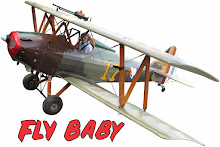
This project isn't dead.  In order to assemble the wings I needed more space in the attic.  The easy solution was to move the Fly Baby out and get it back flying.  I need a plane to fly anyway.  I might be able to finish the Cessna 140 faster but it is already out of the attic.  My current efforts are focused on getting our Fly Baby, which we originally finished in 1966, back in the air.  I had it in the attic slowly working on recovering it and making several improvements.

 This summer my neighbor Dan helped move the plane back out of the attic.  When We moved it up there 10 years ago it didn't seem nearly so heavy.  I think I'm starting to get old.

 We slid the engine down the stair railing and put it back on the fuselage.

 I've built a new cowl, repaired the engine baffles, and welded up a new tank.

 The grand kids helped put new fabric on the wings and rib stitching is done.  I'll keep applying tapes when we have warm dry days.  I should have it back in the sky this spring.
 I also bought a new head stock for the Shop Smith.  The 1983 motor overheated on short cuts so I couldn't cut out the spars, which I've had for years.  The new Mark VII head stock is amazing, it runs so smooth.  I also brought home my fathers support stands so I now have enough stands to have 2 in front and 1 behind the saw while cutting the spars.


I've also downloaded SolidWorks, the best CAD software, free from EAA.  I've finished training, and modeled my first WACO NINE parts and assembly.  There are some issues I still want to resolve by modeling the airplane in SolidWorks.  When I'm done there will be a full set of drawings for the next person.

This is PN 476.  The wing drag wires go through the copper grommets on each end.

Monday, January 12, 2015

Registration Number Changed To NC1184

When the plane was first registered it was given Temporary Registration Number 1184.  In November 1927 it was given License Number NC3391.  That number is currently on a Pitts Special.  I was able to get NC3397 which was at least close.  The once temporary 1184 was on a Twin Beech when I started this project.  That number has expired long enough that for $10 I was able to get it.  As of today the number has been changed on the plane back to NC1184.  OK enough paperwork, back to working on the plane.


Saturday, March 22, 2014

Lift, Drag and Center of Pressure Curves for the Aeromarine 2-A Airfoil


It's like Christmas again, first the radiator and now this.  I've search all over for this chart.  I knew the airfoil was tested at MIT in December 1922 but they say they threw away all their old files.  With this I should be able to recalculate the Longitudinal Stability and Control so I can determine a safe range for the center of gravity.  I have all the original weight data.  Nothing indicates they ever calculated where the CG should be, just where it was at gross weight.  Everything says the plane is tail heavy and the engine probably should move forward a little.  This is so cool.

I was searching the WACO Drawing CD from Steve Curry for some drawings for John LeBlanc and there it was.  I've had it for 3 years and didn't know it.

Saturday, February 25, 2012

Roto-Tiller Delays Project

 I haven't been getting much done on my airplane projects for the past couple months because I've been busy rebuilding my wife's roto-tiller.  It's a nice heavy duty 8 HP machine built about 1978.  She got it for free and I've been promising for a couple years to rebuild it.  Between the rust and dried grease nothing moved except the engine which turned over with rather weak compression.  The wheels were rusted onto the shafts and had to be cut off and welded back together in order to get the transmission apart.  Other than the tines, tires, hardware, a couple chains and the gas tank which all had to be replace, the rest of the parts just needed cleaning and painting.  A little Marvel Mystery Oil got the rings loose, and with a rebuild on the carburetor the engine runs great.
 The good news is the tiller works great.  I still need to print a couple vinyl labels I couldn't save and make a cover for the pulleys.  The bad news is I spent $900.  Fortunately You can't buy a new one this nice for that price and it was a lot of fun.

Time to plant the garden or we won't have any peas this year.


Monday, February 13, 2012

EAA Gas Welding Class

I've spent this weekend in Virginia Beach practicing welding at the EAA SportAir Workshop.  It was good fun and I learned plenty even though I had to learn to weld to get my A & P back in the 70s.  I don't weld often so I've been practicing on lots of scrap and some tubing from Lowes.  I had lots of questions which I couldn't find answers to on line, in books, or in the EAA welding video.  It really was money and time well spent and good fun.  Now I'm ready to weld up the Tail Surfaces and the Wing Fittings.

Friday, December 23, 2011

The Fun is in the Doin'


If you've read my postings for a while you've probably noticed I'm not very orderly in working through the project from start to finish.   I tend to work on what ever I have parts, materials, tools ,or ideas for at the time.   When I helped my dad build the Fly Baby back in the 60s we were very methodical.  Pete Bowers wrote the plans/manual as a set of step by step instructions.  You start on page one of a chapter and just check off each task as you go.  When every item is checked off you have an airplane, actually a very cool airplane.

As much fun as it was working with my dad on the magic of building that plane you would think I would be more orderly in my current projects.  I'm not because what I learned from that process was that each little item was a project in and of it's self.  Each had it's own knowledge required, it's own materials, tools and methods.  To some extent it didn't matter so much the order things were done as it did that each was done.

By focusing on each small task, enjoying it, and taking pride and satisfaction in it's completion building an airplane is very easy, a lot of fun, and rewarding.  Finishing and flying the airplane was great but just one more little task or adventure just as each flight in it has been since.

By enjoying each saw cut, each hole drilled, each tool made, each little assembly, each flight for all the joy it contains, the Fun really is in the Doin' Not Just in Being Done.

Merry Christmas and a Fun New Year!

Tuesday, October 5, 2010

More Parts and Info for the Project

The summer is over so I now have more time to work on the planes. I'm continuing to make the last of the stick built ribs while learning about the solid ribs which still need to be made. More on that next time. While travelling to a few fly-ins this summer I acquired some very cool things. At the Waco Historical fly-in I was talking with Tim Pinkerton who has a KNF and 2 WACO TEN projects. He mentioned he had a nose cowl he was sure was for a NINE and was willing to trade it.

It's been modified with various holes and a lot of dents but if repairable and otherwise matches the drawings exactly. It will be one of my winter projects to repair it. It's made from a spun aluminum part with a former in it to give it it's oval shape and stiffness. It is so cool to have another original part. Because the front of the fuselage was cut off I had nothing of the engine cowl.
This would have been the most complicated part to make for the cowl. I'd like to repair it and paint it in the original Dutch Blue. Anyone have a 1926 ValSpar paint chart with dutch blue in it. I do have some original paint on the cockpit cowl parts under the black repaint of long long ago.


The next cool thing was also at the Troy fly-in. Jim Beisner was kind enough to loan me his WACO TEN gas tank. It's the same as the NINE, 83 pounds of terneplate and solder. It has a dent on one side and a small hole from a branch on the other side. Both are easily fixed. Because there are no NINEs flying I wanted an original tank to keep the weight and balance the same until we know the rigging is right and the plane flys well. After that we'll make an aluminum tank and use the weight saving for something more important like a starter.
.
.
.
.
.
.
.
.
.
.
The last cool thing, for which I have no pictures is the result of going to the American Waco Club fly-in at Creve Couer. Steve Curry of Radial Engines Ldt. was there. Along with his engine work he's been gathering every bit of data on WACO TENS, he has a project plane. He's been scanning all the drawings he can get his hands on and put them all on a DVD. I loaned him my copy of the drawing list for the first 4,000 drawing numbers to add to the DVD.
I bought a copy and it has already been a gold mine worth twice the price. The large drawings will need a copy from the NASM archives because of scanning limits. The smaller ones are great.
Because the TEN is an improved NINE many of the details of how parts were made and many of the parts are in the TEN drawings. They made very few NINE drawing. The planes were nearly all built before the feds required drawings. Much of the little details just are not on any of the NINE drawings. For the TEN they eventually made drawings of almost all the parts. It's just been great.
My next WACO project will be an NAZ primary glider. I have a copy of the master drawing list which includes the NAZ and they all seem to be on this DVD.
Thanks Steve, Jim and Tim!


Sunday, July 14, 1996

Found Serial Number


I found the Construction Number (production Serial Number) while showing the fuselage to my brother in-law Mike Clark. The number 264 was carefully written on the back of the turtle deck former behind the rear cockpit. The font used was the same as that used for the drawing number on some of the oldest drawings. This seems to much of a coincidence not to have been done at the factory. Besides which it's in a very awkward place to do after installing on the plane.

From various letters from the feds to other Waco NINE owners the factory stamped the official Construction Number on the right forward landing gear fitting. That part of the fuselage was cut off and not available for us to find. The number on the former may have just been easier to see during the assembly process at the factory.

Saturday, May 18, 1996

In the Beginning

I had planned to build a Hatz Biplane to use for giving rides in the EAA Young Eagles program. I thought kids should get a ride in something more like the barnstormers of the '20s flew. A friend of mine and co-worker, Leon Johenning, suggested that if I wanted a plane which looked like something from the '20s I should build the real thing, a WACO. Drawings were available for the Taperwing, so how much more work would it be to have the real deal? We along with our wives drove 8 hours west to attended the 1994 National WACO Club fly-in in Mount Vernon, Ohio hoping to learn about WACO's. It rained all weekend and only 3 planes attended. Leon wandered over to a nearby airport where a nice cabin WACO was for sale, since there wasn't much else happening. He convinced me to go look and it was lust at first sight. We had just sold our house so I had the money for a down payment and the credit to get a mortgage on the rest. After 360 hours of great fun I sold the VKS-7F to a fellow in Michigan who at the time ran Waco Classic in Battle Creek.

Before I sold the WACO I had attended the 1996 Vintage Chapter 3 Fly-in where I met Morton Lester. He picked numbers badly at the evening banquet so our table was last to get fed. As a result we had time to talk about airplanes and Young Eagles. I enjoyed giving rides in the WACO but still wanted an open cockpit late '20s sort of machine. I had been gathering drawings to build a Straight Wing WACO 10 for the purpose. Leon had been right all along it was as easy to build the real deal as the Hatz. Morton said he had a WACO 10 fuselage which might speed my project. I was delighted to just go take pictures and measurements but he was willing to part with it. Two weeks later we were on his doorstep with a trailer to move the fuselage home.

One look told me this was not a 10 but an older NINE. This was even better. We hauled it home May 18, 1996. It took several years to track the heirs of the last owner to get clear title. We're now rebuilding the plane and plan to use this blog to record what we learn and do through that process. We have also been gathering the records of all WACO NINEs ever registered with the fed's to learn more about the lives and times of these planes.


These are Morton's hangers and museum.


This is what we picked up. The fuselage was cut off by a fellow planning to make an airboat out of it. That's another story. From where he cut it off back everything except instruments is there. The headrest was added after 1929.


The last bay of the fuselage had a piece of fabric with eyelets and was laced on with what look like shoe laces. It looks like it reduced airflow through the fuselage and out the tail. The little things you discover when you have original parts.


We'll be posting only as we actually do things so don't expect daily updates, earning the money to pay for this takes priority.